Artificial intelligence is moving fast, and with every new development, the language around it becomes more confusing for everyday business owners, creators, and entrepreneurs. Two terms that are showing up more often are GPTs and AI agents. Many people hear them used in the same conversations and assume they mean the same thing. They do not. While both are powerful tools in the AI ecosystem, they serve different purposes and represent different levels of automation.
Understanding the difference between GPTs and AI agents matters because this shift is not just technical. It is changing how businesses create content, automate work, serve customers, and scale operations. If GPTs opened the door to practical AI for the masses, AI agents may be the technology that pushes automation into a completely new era.
What GPTs Really Are
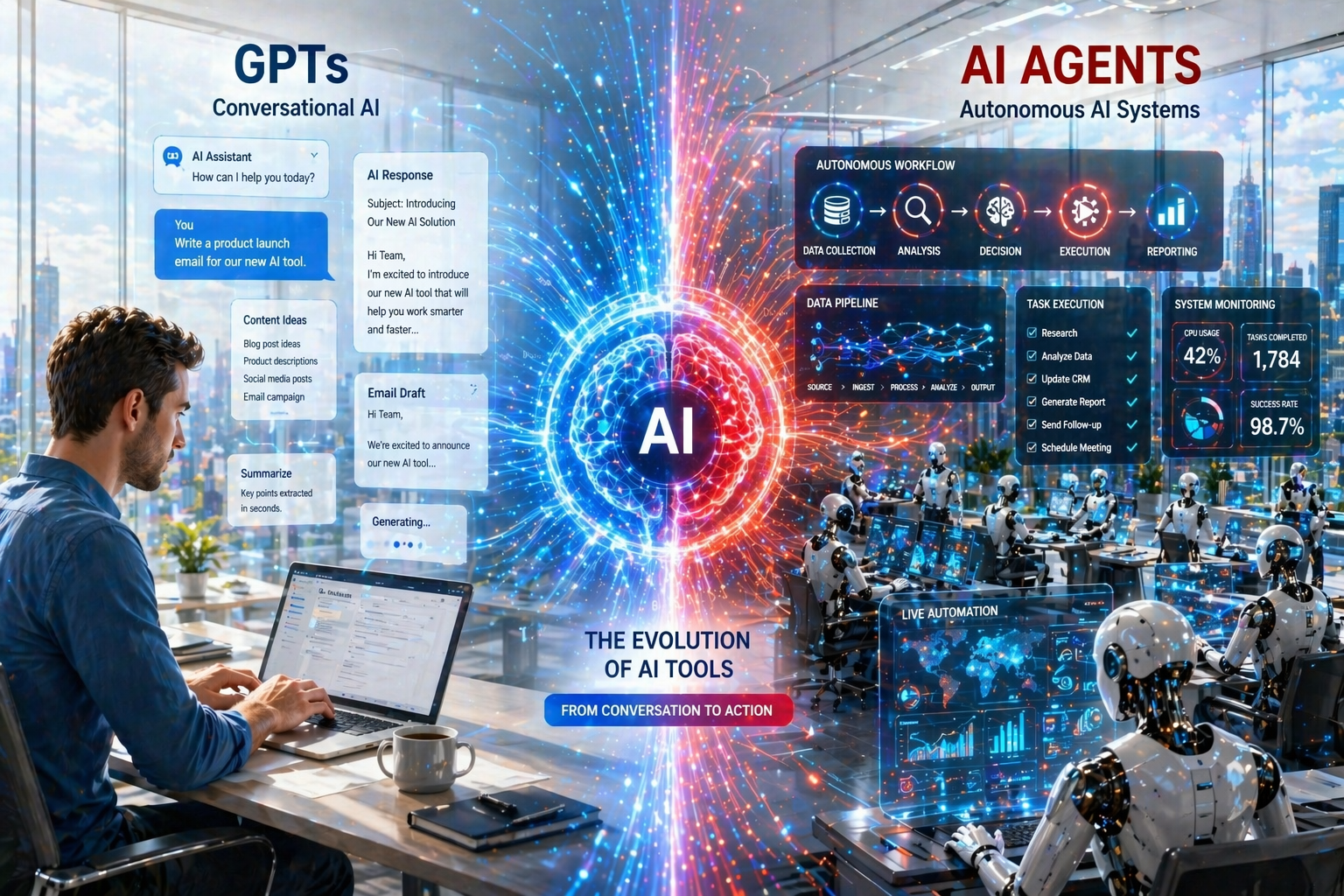
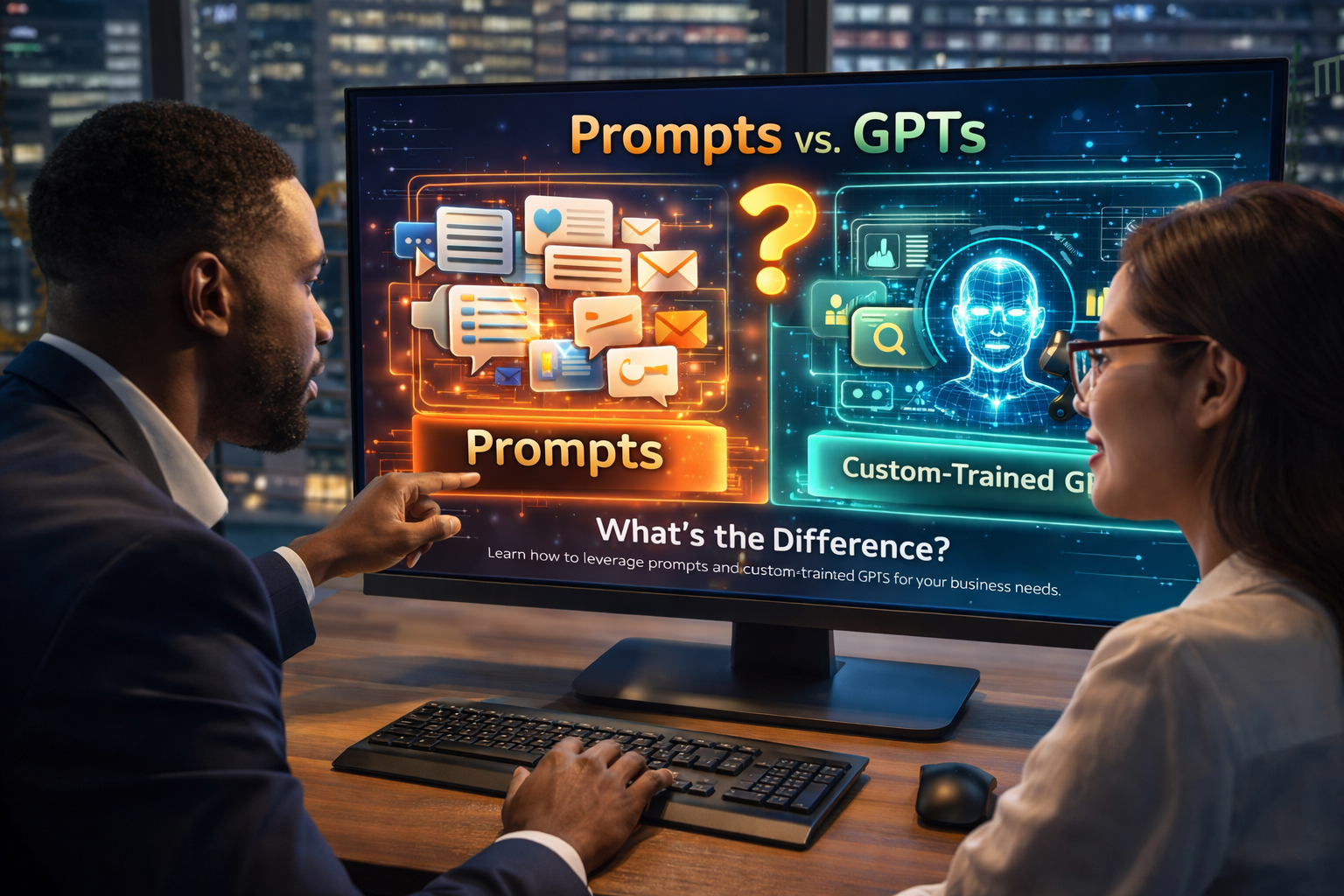
A GPT is best understood as an advanced language-based AI assistant. It is designed to respond to prompts, generate content, answer questions, summarize information, brainstorm ideas, and help users complete specific tasks through conversation. When someone uses ChatGPT to write a blog post, create a marketing email, generate product descriptions, or explain a topic in simple language, they are using a GPT-based system.
GPTs are incredibly powerful because they can understand instructions, adapt tone, and produce useful outputs in seconds. They are flexible, fast, and highly effective for creative and communication-based work. A custom GPT can go even further by being shaped around a business need, such as SEO writing, customer support, social media planning, or sales copy generation. In many ways, GPTs function like highly skilled digital assistants waiting for instructions.
But there is an important limitation. A GPT usually responds when you ask it to do something. It is reactive. It does not typically wake up on its own, make decisions across systems, or carry out multi-step actions in the background unless it is connected to additional tools and workflows.
What AI Agents Are
AI agents take the concept of AI assistance one step further. Instead of simply responding to prompts, AI agents are designed to take action, make decisions within defined boundaries, and complete tasks with a higher level of autonomy. They are built not only to generate language, but to perform sequences of activity.
An AI agent can be thought of as a more independent digital worker. Rather than waiting for one request at a time, an agent can be assigned a goal and then work through the steps needed to accomplish it. That may include gathering information, evaluating options, interacting with software tools, updating systems, triggering workflows, and reporting results back to the user.
This is why AI agents are gaining so much attention. They move beyond content generation into operational execution. A GPT may write an email for you. An AI agent may identify the lead, draft the email, personalize it, send it through a connected platform, log the interaction, and schedule the next follow-up. That difference is massive.
The Core Difference Between GPTs and AI Agents
The clearest way to understand the difference is this: GPTs are conversation-driven intelligence, while AI agents are action-driven intelligence. A GPT is usually focused on generating responses, ideas, or content. An AI agent is focused on carrying out tasks and moving work forward.
A GPT is like a brilliant assistant sitting at a desk waiting for your next instruction. An AI agent is more like a trained operations manager who can take a goal, use available tools, and begin handling the process. Both are valuable, but they serve different roles.
This is where many businesses become excited. GPTs already help save time. AI agents have the potential to save time on a much larger scale because they can reduce not just thinking work, but process work. They do not just help you write the plan. They help execute the plan.
Why AI Agents Are the Next Evolution
The reason AI agents are being called the next evolution of artificial intelligence is because they bring a level of automation that feels far closer to having real digital labor. For years, businesses have used software automation tools that follow fixed rules. If a customer fills out a form, then the system sends an email. If an invoice is paid, then the system updates a spreadsheet. Those automations are useful, but they are rigid.
AI agents introduce flexibility and reasoning into automation. Instead of only following pre-set rules, they can interpret goals, adapt to context, and make better decisions along the way. This gives businesses a new kind of leverage. Entrepreneurs no longer have to choose between hiring more people or doing everything themselves. In many cases, they will be able to build AI-powered systems that behave more like digital team members.
That is why this trend matters so much for online business owners. AI agents can eventually manage parts of customer service, lead generation, scheduling, internal reporting, research, ecommerce support, content workflows, and much more. They are not just tools for producing text. They are becoming tools for producing outcomes.
What This Means for Entrepreneurs and Business Owners
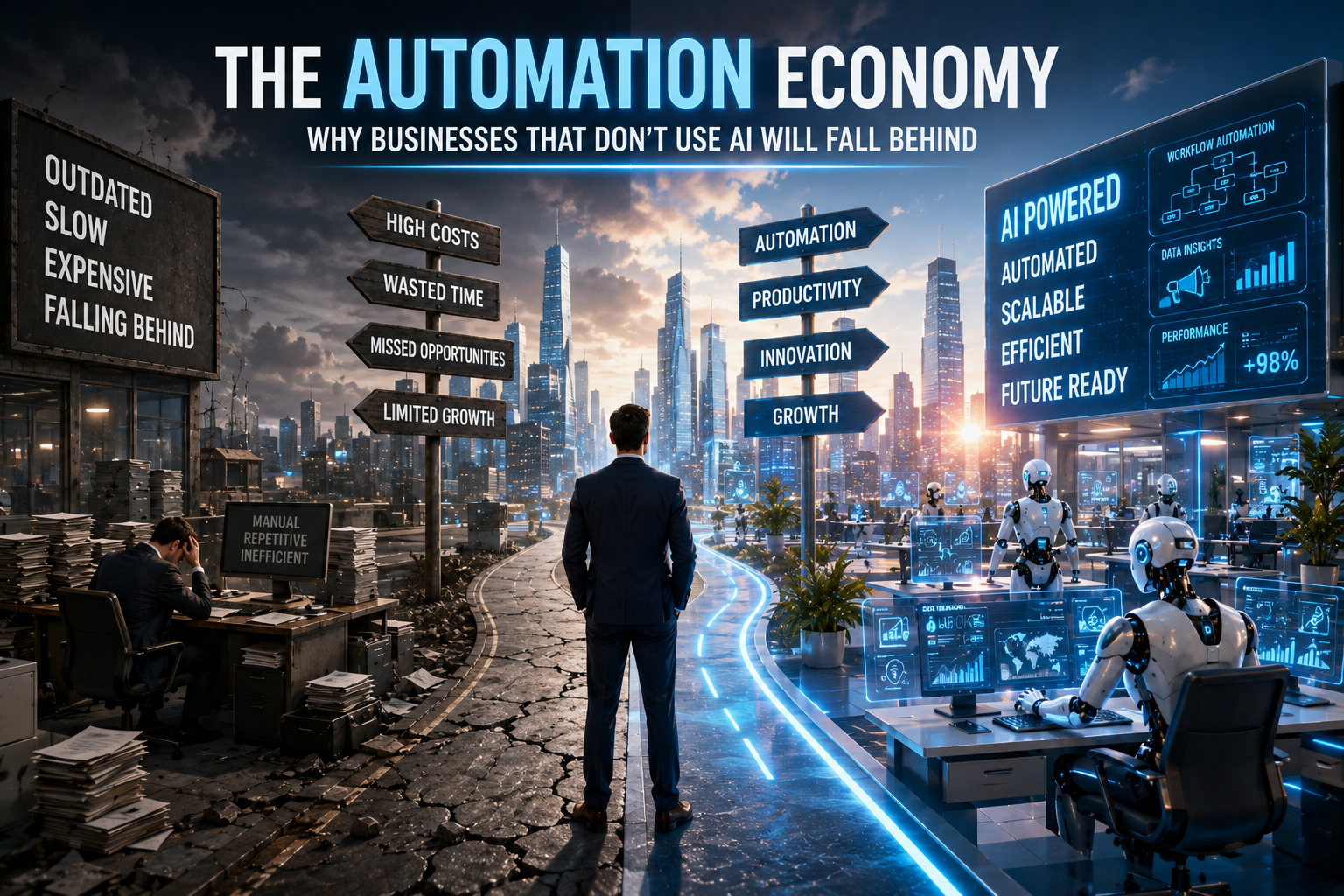
For entrepreneurs, this shift is especially important because it lowers the barrier to scale. In the past, growth often required adding more staff, more managers, and more overhead. With GPTs, one person could already create more content and move faster. With AI agents, one person may soon be able to run processes that once required several employees.
That does not mean human talent disappears. It means human effort becomes more strategic. Business owners can focus more on vision, relationships, creativity, and leadership while AI systems handle more of the repetitive operational load. The smart entrepreneur will not ask whether GPTs or AI agents are better. The smart entrepreneur will ask how to use both together.
GPTs can help generate ideas, messaging, campaigns, and communication. AI agents can help carry those outputs into motion across workflows and systems. Together, they form a powerful combination that can transform how modern businesses operate.
The Future of AI Tools
The future will not belong only to companies using AI for writing assistance. It will belong to companies using AI to think, act, respond, and automate intelligently. GPTs made AI accessible. AI agents are making AI operational.
This is the shift from asking AI to help with tasks to asking AI to help run systems. That is why this moment matters. It is not simply about smarter chat. It is about smarter execution. Businesses that understand this early will have a real advantage in speed, efficiency, and scale.
Final Thoughts
GPTs and AI agents are connected, but they are not the same. GPTs are powerful conversational tools that generate language, ideas, and useful outputs. AI agents build on that foundation by adding action, autonomy, and workflow execution. If GPTs were the breakthrough that introduced millions of people to practical AI, AI agents may be the breakthrough that changes automation forever.
For entrepreneurs, creators, and online business owners, this is more than a trend to watch. It is a shift worth preparing for now. The businesses that learn how to use both GPTs and AI agents wisely will be positioned to work faster, automate smarter, and compete at a much higher level in the years ahead.
Explore AI-powered tools, custom GPTs, and digital resources designed to help entrepreneurs automate smarter at AI Omni Shop.

0 Comments