The business world is entering a new era.
For decades, companies gained competitive advantages through larger teams, bigger budgets, and greater resources. Businesses invested heavily in people, equipment, office space, and technology to improve productivity and increase profits.
Today, however, a new economic shift is taking place.
Artificial Intelligence and automation are changing the rules of business faster than many people realize. Companies of every size—from solo entrepreneurs to global corporations—are discovering that AI can perform tasks that once required entire departments, dramatically increasing efficiency while reducing costs.
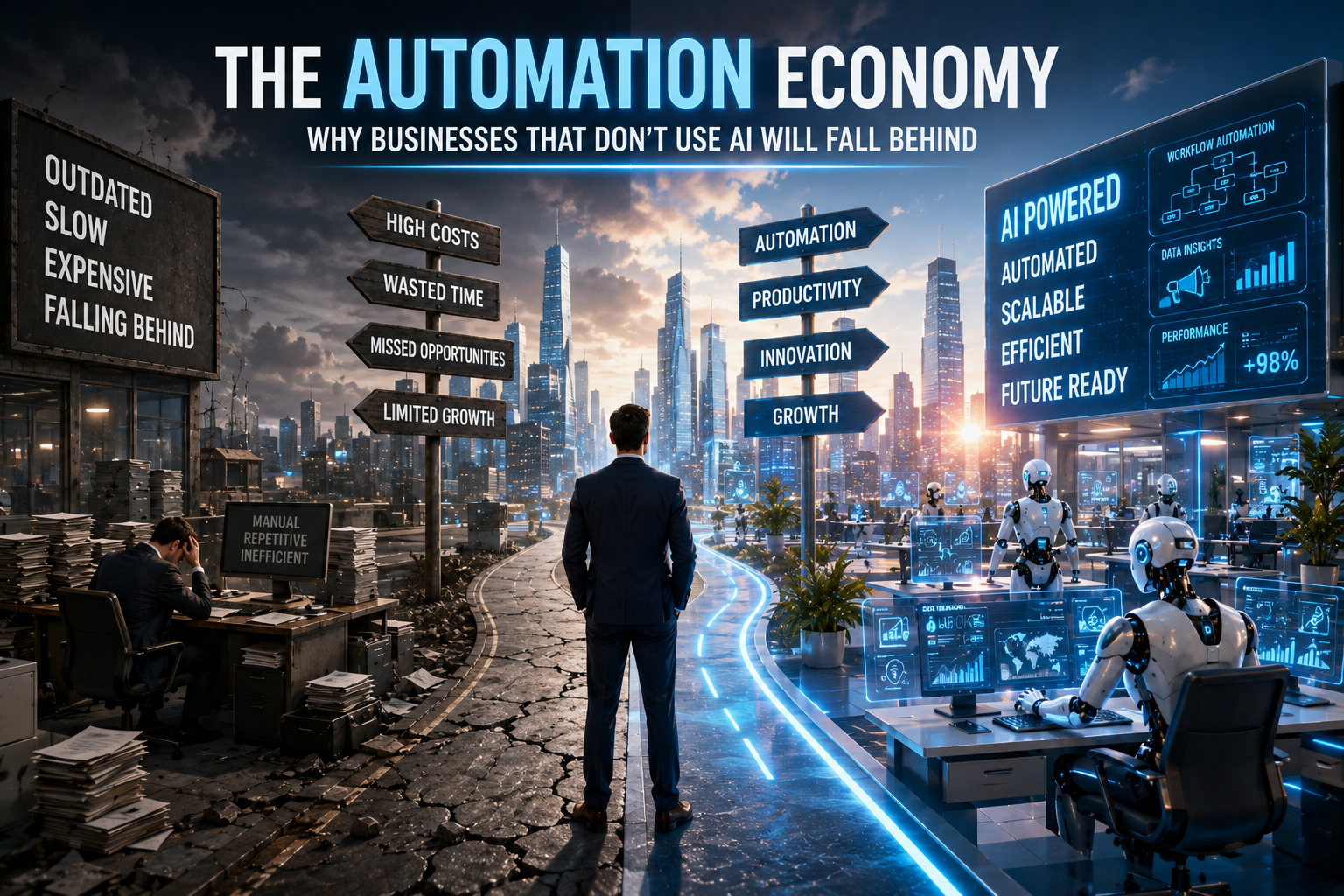
This transformation is creating what many experts are calling the Automation Economy.
In this new environment, success is becoming less dependent on the size of a company’s workforce and more dependent on how effectively it uses intelligent automation.
The businesses that embrace this change are gaining speed, efficiency, and competitive advantages. The businesses that ignore it risk being left behind.
What Is the Automation Economy?
The Automation Economy refers to a business environment where artificial intelligence, software automation, machine learning, and digital systems perform an increasing number of tasks traditionally handled by humans.
This is not just about robots replacing factory workers.
The Automation Economy affects nearly every industry, including:
- Marketing
- Customer service
- Content creation
- Sales
- Research
- Finance
- Healthcare
- Education
- Ecommerce
Tasks that once consumed hours of employee time can now be completed in minutes using AI-powered systems.
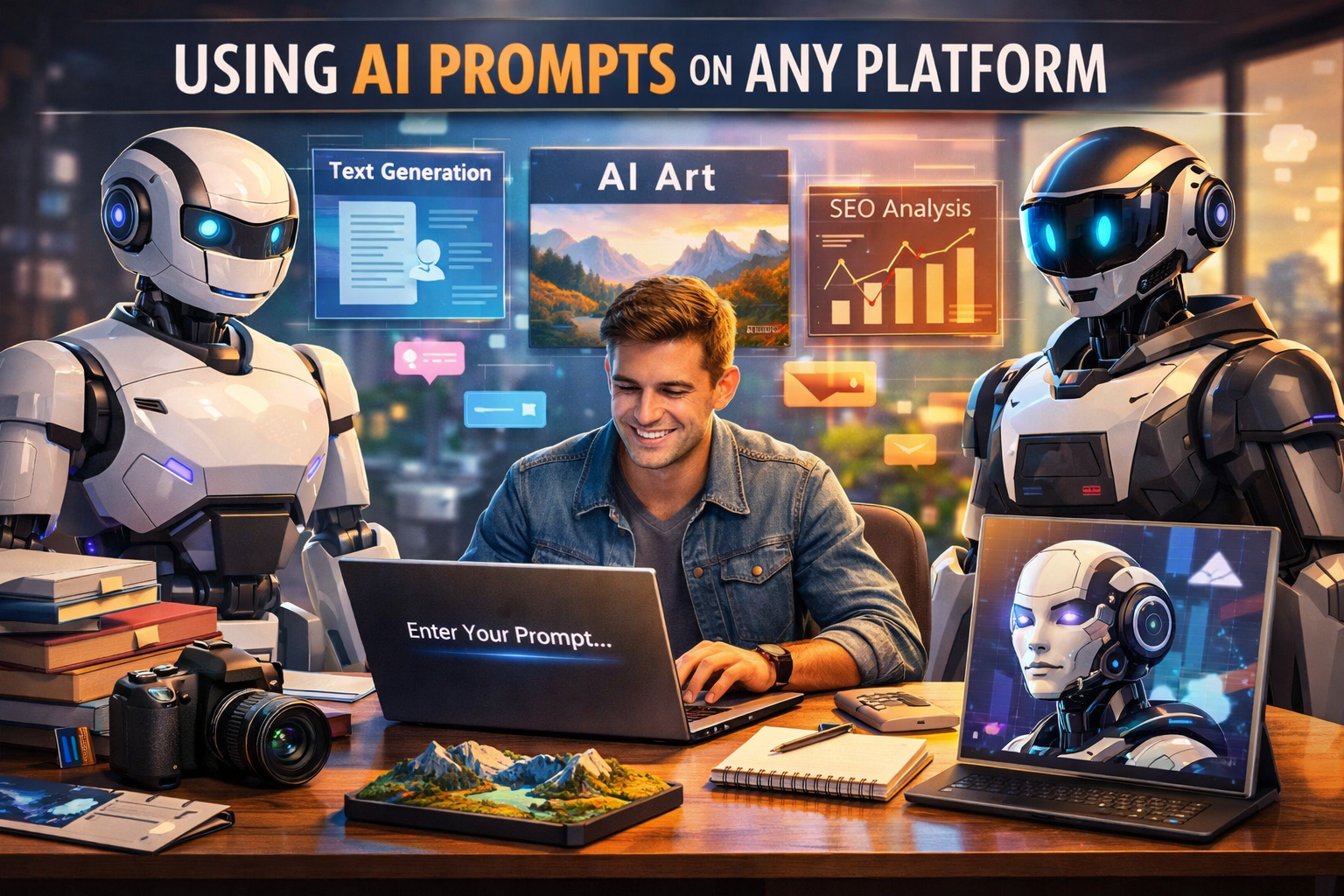
For example, a business owner can use AI to generate marketing campaigns, write blog articles, create social media content, analyze customer data, answer support questions, and develop business plans.
What previously required multiple employees can often be accomplished by a single entrepreneur supported by intelligent AI tools.
The result is a dramatic increase in productivity.
Why This Shift Is Happening Now
The idea of automation is not new.
Businesses have used software and automation tools for decades. However, traditional automation systems were limited. They could only follow specific rules and predefined instructions.
Modern AI changes that equation.
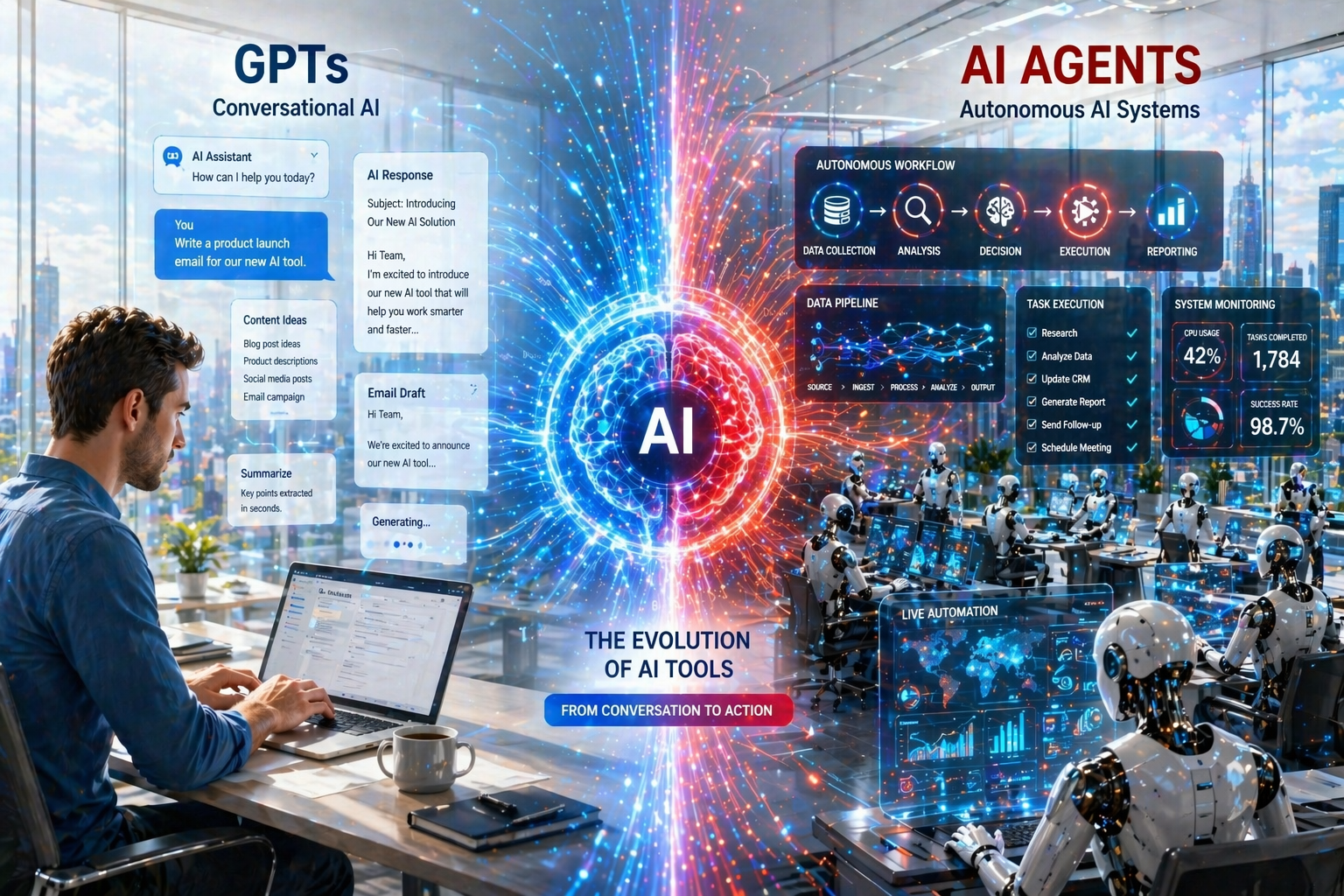
Today’s AI systems can understand language, generate content, analyze information, recognize patterns, and assist with decision-making.
Instead of simply following rules, AI can adapt to situations and perform complex tasks that previously required human judgment.
At the same time, AI tools have become more affordable and accessible.
A few years ago, advanced AI capabilities were available only to large corporations with massive budgets.
Today, entrepreneurs can access powerful AI systems from a laptop or smartphone for a fraction of the cost.
This accessibility is accelerating adoption across every industry.
The Businesses Winning in the Automation Economy
Businesses that adopt AI early are already seeing measurable benefits.
They are producing more content.
They are responding to customers faster.
They are making decisions more quickly.
They are reducing operational costs.
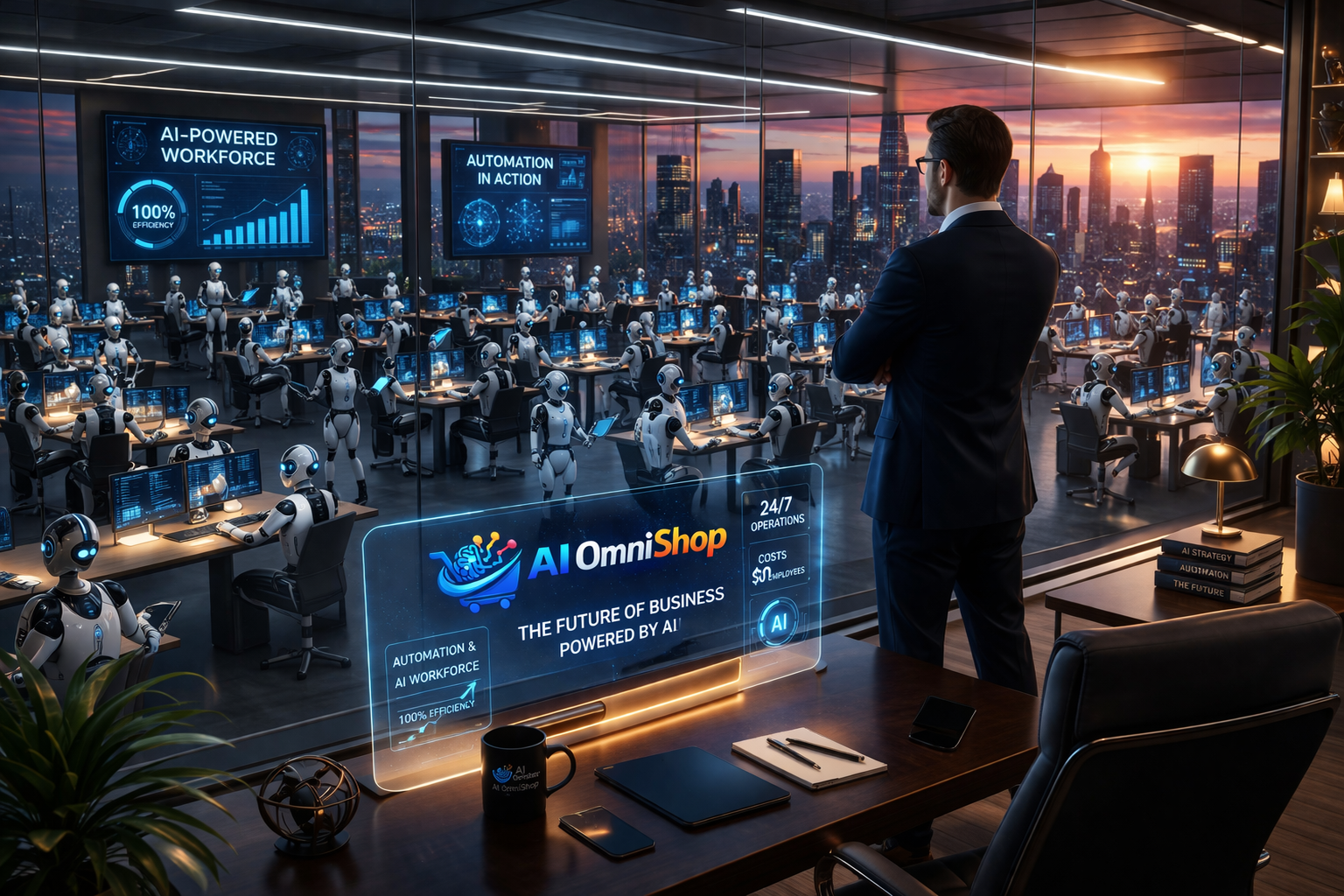
They are scaling without significantly increasing payroll expenses.
Consider a small online business.
In the past, that business might have needed a copywriter, customer support representative, social media manager, researcher, and marketing coordinator.
Today, AI can assist with each of those functions.
The business owner still provides leadership, creativity, and strategic direction, but AI handles much of the repetitive work.
This allows smaller businesses to compete with larger organizations in ways that were previously impossible.
The Cost of Waiting
One of the biggest risks facing businesses today is not adopting AI too slowly—it is failing to adopt it at all.
History provides countless examples of technological shifts that transformed industries.
Companies that ignored the internet struggled.
Businesses that resisted ecommerce lost market share.
Organizations that failed to embrace digital marketing often fell behind competitors.
The same pattern is emerging with artificial intelligence.
Customers are beginning to expect faster responses.
Markets are moving more quickly.
Competition is increasing.
Businesses using AI can often operate faster, deliver more value, and scale more efficiently.
Those advantages compound over time.
A business that saves five hours per week through automation gains more than 250 hours each year.
A company that saves twenty hours per week gains more than 1,000 hours annually.
Those time savings translate into additional opportunities, increased productivity, and improved profitability.
AI Is Not Replacing Business Owners
One of the most common misconceptions about AI is that it will replace entrepreneurs and business leaders.
The reality is quite different.
AI works best when paired with human creativity, judgment, leadership, and vision.
Artificial intelligence can generate content, analyze data, and automate workflows.
It cannot replace the human ability to build relationships, understand emotions, create innovative strategies, or inspire teams.
The most successful businesses will not be those that replace people entirely.
They will be those that combine human intelligence with artificial intelligence.
This partnership creates a powerful competitive advantage.
Practical Ways Businesses Can Start Using AI Today
The good news is that businesses do not need to completely reinvent themselves overnight.
Most successful AI adoption begins with small improvements.
Business owners can start by using AI to:
- Draft emails and marketing content
- Generate blog articles
- Create social media posts
- Conduct research
- Analyze business data
- Improve customer service
- Develop product descriptions
- Automate repetitive administrative tasks
Even modest improvements can create significant productivity gains over time.
The key is to begin experimenting and learning.
Businesses that gain experience with AI today will be far better positioned for tomorrow.
The Future Belongs to the Adaptable
The Automation Economy is not a temporary trend.
It represents a fundamental shift in how work is performed and how businesses operate.
Artificial intelligence will continue to improve.
Automation capabilities will continue to expand.
Companies that embrace these technologies will discover new ways to increase efficiency, serve customers, and grow revenue.
Those that resist change may find themselves struggling to compete against businesses that can accomplish more with fewer resources.
The future will not necessarily belong to the largest companies.
It will belong to the most adaptable ones.
Final Thoughts
Artificial intelligence is rapidly becoming one of the most powerful business tools ever created.
The Automation Economy is already here, and its influence is growing every day.
Businesses that embrace AI can operate more efficiently, reduce costs, increase productivity, and unlock new opportunities for growth.
Businesses that delay adoption risk falling behind competitors who are moving faster and working smarter.
The question is no longer whether AI will transform business.
The question is whether your business will be ready when it does.
The companies that learn to work alongside AI today will be the ones leading their industries tomorrow.


0 Comments